
For decades, solvents were central to how pressure-sensitive adhesives were made.
They dissolved the adhesive polymer so it could be coated evenly onto a carrier. Once applied, the solvent evaporated, leaving a consistent adhesive layer behind.
The process worked well. But it released volatile organic compounds (VOCs) into the air.
As environmental regulation tightened, manufacturers faced a choice: reduce emissions, or change the chemistry.
Many did both.
Why Solvents Came Under Pressure
VOC emissions contribute to air pollution and can present health risks in poorly ventilated working environments.
Across the UK and Europe, legislation began limiting solvent emissions from industrial coating processes. Producers were required to capture and treat emissions, or reduce solvent use altogether.
At the same time, customer expectations changed. Workplace safety, sustainability reporting and indoor air quality became part of the specification.
The challenge was clear. Remove harmful chemistry without sacrificing permanent performance.
The Technologies That Emerged
Adhesive engineering responded with several alternatives, each with its own performance profile.
Water-based acrylics
The adhesive polymer is dispersed in water rather than dissolved in solvent. These systems offer good clarity, UV stability and consistent performance, making them well suited to graphics, labels and general bonding.
Hot-melt adhesives
Applied in a molten state, they set as they cool, with no carrier liquid to evaporate. Hot melts deliver high initial tack and fast processing, which suits packaging and carton sealing. They are typically less resistant to high temperatures and prolonged UV exposure.
UV-cured acrylics
Coated as a liquid and cured almost instantly using ultraviolet light. This approach removes solvents from the process while delivering strong, durable adhesion.
None of these is a universal replacement.
Each was engineered for a specific balance of performance, processing and environmental impact.
Performance Had to Remain Permanent
Early alternatives did not always match solvent systems.
Moisture resistance, temperature tolerance and long-term ageing were common concerns. For technical users, a greener adhesive that fails in the field is not an improvement.
This drove sustained development in polymer chemistry:
- Improved cohesive strength for load-bearing applications
- UV-resistant acrylic chemistries for long-term outdoor exposure
- Clearer adhesive layers for visual and display applications
- Better wet-out across a wider range of substrates
Today, many solvent-free systems deliver the durability that demanding applications require.
Where Solvent-Free Makes a Difference
Graphic lamination is one of the clearest examples.
Photos, graphics and transparencies need a bond that is permanent, optically clear and stable over time. Solvent-free, pH-neutral adhesives avoid chemical interaction with printed media, while UV resistance helps prevent yellowing.
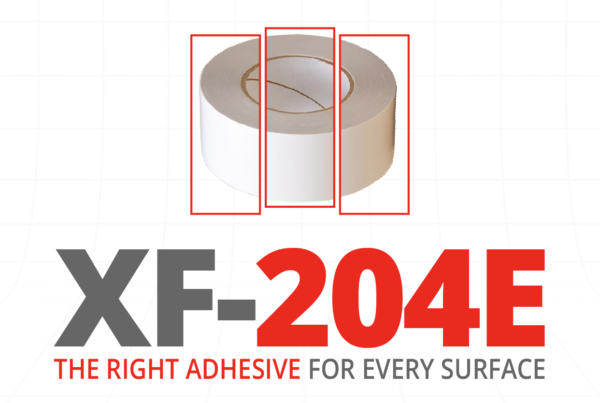
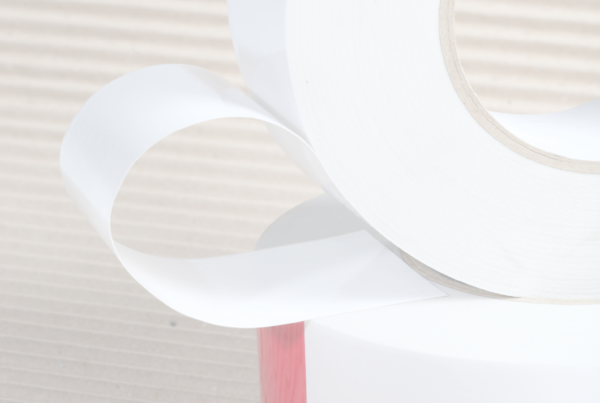
SKD’s crystal clear solvent-free mounting tape shows what this looks like in practice:
- 70 microns thick, with an ultra-clear 30 micron PET foil on both sides
- UV-resistant and pH-neutral, for indoor and outdoor use
- Permanent lamination on glass, acrylics, plastics, foils, wood and metals
- Supplied in reels up to 1,550mm wide, or converted to bespoke sizes
Solvent Systems Still Have a Role
The move away from solvents is not absolute.
Solvent acrylic adhesives remain the benchmark for many permanent, high-performance applications. They deliver high tack and strong holding power, with excellent resistance to UV, ageing, moisture and plasticisers.
Cross-linking takes this further.
In SKD’s DM791 thin clear tape, a cross-linked solvent acrylic improves holding power, temperature resistance and plasticiser resistance at just 100 microns. This suits permanent mounting on glass, plastics, metals and flexible magnets.
The DM389, with a PET carrier and high-tack solvent acrylic, keys to flat, porous and fibrous surfaces indoors and outdoors. It is used for signs, nameplates, extrusions, POS assembly and banner hemming.
Adhesive coaters also manage solvents more responsibly today, through emission capture and solvent recovery.
The goal is not to eliminate one technology.
It is to specify the right chemistry for each application.
Last section, updated paragraph:
With over 20 years of technical experience, SKD Tapes helps customers match adhesive chemistry to application, from solvent-free lamination tapes to high-performance solvent acrylics. Materials are held in jumbo reels and converted in-house into log rolls, slit rolls, spools and die-cut components.
Specification Is the Real Innovation
Choosing an adhesive today means weighing several factors together:
- The substrate
- The operating environment
- The required service life
- Regulatory and customer requirements
- The application and processing method
This is where expertise matters.
With over 20 years of technical experience, SKD Tapes helps customers match adhesive chemistry to application, from solvent-free lamination systems to high-performance solvent acrylics.
Responsibility and performance are not opposing goals. With the right specification, you can achieve both.
Speak with our technical team to review your requirements.